
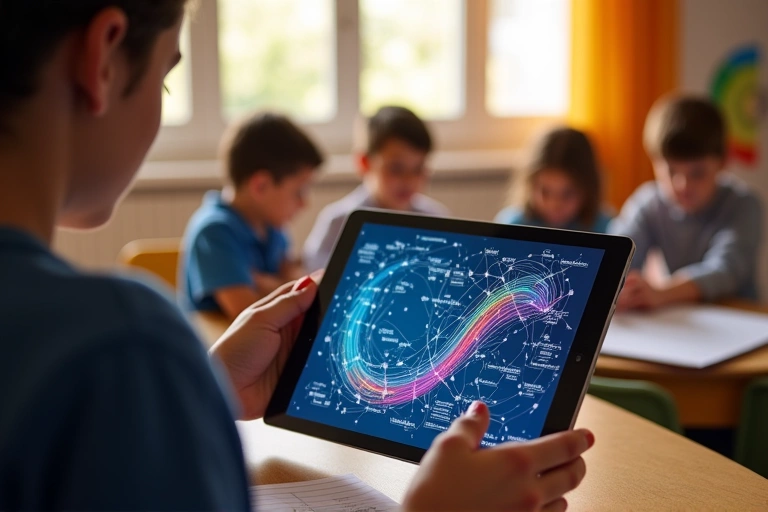
How AI Analyzes Patterns Across Multiple Micro Observations
The Challenge of Traditional Observation
For decades, teachers have diligently observed students, jotting down notes on clipboards, filling out lengthy forms, and trying to capture the fleeting moments of discovery that happen in a bustling classroom. While invaluable, this traditional approach is incredibly time-consuming and often results in a series of static snapshots rather than a continuous, evolving picture of a child's development. The administrative burden is immense, leaving less time for what matters most: teaching. But what if we could capture those moments effortlessly and use technology to connect the dots? This is where the synergy of micro-observations and artificial intelligence comes in, fundamentally changing how we understand and support student progress.
From Snapshots to a Story: The Power of Micro-Observations
A micro-observation is a small, in-the-moment capture of learning. Instead of a formal, 20-minute observation session, think of a 30-second voice note a teacher records while a child successfully explains their reasoning in a maths problem. Or a quick photo of a group of children collaborating on a construction project. Or a short video of a student reading a whole sentence for the first time. These are the building blocks. In Parent Portal, teachers can capture these moments instantly using voice, photo, or video, and link them to curriculum objectives without breaking the flow of the lesson. A single micro-observation is just a pixel. It’s valuable, but its true power is unlocked when it becomes part of a much larger image. By accumulating hundreds of these small data points over weeks and months, we begin to build a rich, longitudinal profile for each student—a detailed story of their learning journey, not just a summary of their test scores.
How AI Becomes the Educational Data Analyst
Collecting hundreds of observations is one thing; making sense of them is another. Manually sifting through this data would be an impossible task for any teacher, which is where Artificial Intelligence steps in. The AI engine within a platform like Parent Portal acts as a tireless analyst, processing every piece of information to find meaningful patterns that would be invisible to the human eye. It doesn't get tired, it doesn't have biases, and it can process vast quantities of data in seconds. The AI scans transcribed voice notes, analyzes keywords, tracks progress against curriculum tags, and cross-references observations over time to build a dynamic understanding of each child's strengths, weaknesses, and learning preferences.
The goal is to move beyond isolated data points and see the whole child, understanding their journey, not just their destination.
This automated analysis is the key to unlocking the potential of all that collected data. It transforms a simple collection of moments into a powerful tool for educational strategy, turning raw data into actionable intelligence. This is a core function of next-generation school admin software, designed to empower educators, not overwhelm them.
Identifying Key Learning Patterns and Trajectories
So, what kind of patterns does the AI actually find? The process is multi-faceted. First, it performs thematic analysis on transcribed voice notes, identifying recurring concepts, vocabulary, and even emotional sentiment. For example, it might notice that a child frequently uses advanced scientific vocabulary but struggles with terms related to creative writing. Secondly, it tracks curriculum coverage. By analyzing which EYFS or National Curriculum objectives are tagged most (and least) often, the AI can highlight areas where a child is excelling and where they might have gaps. This provides a clear, evidence-based view of their progress against age-related expectations. Finally, it analyzes the learning trajectory over time. Is progress steady, or has it plateaued? Did a particular teaching strategy lead to a spike in positive observations? The AI can visualize this journey, helping teachers understand what works for each individual learner.
It cross-references this with structured data, like curriculum tags and timestamps.
Machine learning models, trained on vast datasets of educational information, then identify statistical correlations and trends.
This allows the system to generate unique, evidence-based summaries and suggestions for each student.
This deep level of analysis provides insights that would be nearly impossible to glean through manual methods. It helps teachers see the forest, not just the individual trees, enabling a more strategic and personalised approach to teaching and learning.
Turning Insights into Action
Identifying patterns is only half the battle. The true value comes from turning those patterns into actionable steps that benefit the student. This is where AI transitions from a passive analyst to an active assistant. One of the most significant ways it does this is by automating time-consuming administrative tasks. For instance, Parent Portal's AI Report Writing Assistant can generate unique, personalised end-of-term report comments based on the accumulated observation data. It synthesizes months of progress into a few coherent, evidence-backed paragraphs, saving teachers countless hours and ensuring reports are a true reflection of the child's journey. This is a game-changer to reduce teacher workload and combat burnout. Furthermore, the AI can suggest next steps and generate ideas for activities tailored to a child's specific needs, helping teachers with differentiation and planning.
- Sarah Kent, Headteacher
By automating the heavy lifting of data analysis and reporting, AI frees up teachers to focus on what they do best: building relationships with students and creating inspiring learning experiences. It enhances their professional judgment with powerful data, rather than replacing it.
A Connected Ecosystem for School Improvement
The impact of this technology extends beyond individual classrooms. For school leaders, the aggregated, anonymised data provides a powerful overview of teaching and learning across the entire school. They can identify curriculum strengths, spot school-wide development needs, and track the impact of new initiatives in real-time. This makes it a vital component of modern school communication tools and leadership strategy. For parents, it opens a window into their child's school day like never before. Instead of relying on a single parents' evening or an end-of-term report, they receive a continuous stream of meaningful updates, fostering a stronger home-school partnership. As we look towards EdTech 2025, it's clear that integrated platforms that seamlessly combine communication, observation, and intelligent analysis are the future. They create a connected ecosystem where data flows effortlessly between teachers, leaders, and parents, all working together to support the child at the centre.
Comments